Mioshe: The Serif Font That Flows With Elegant Connection
There's a moment in every design project where the typography either elevates everything or holds it back. You've got the perfect color palette, a strong layout, and compelling copy, but the font choice feels disconnected—literally. The letters sit next to each other like strangers at a bus stop, each one doing its own thing with no sense of cohesion. That's exactly the problem Mioshe was designed to solve.
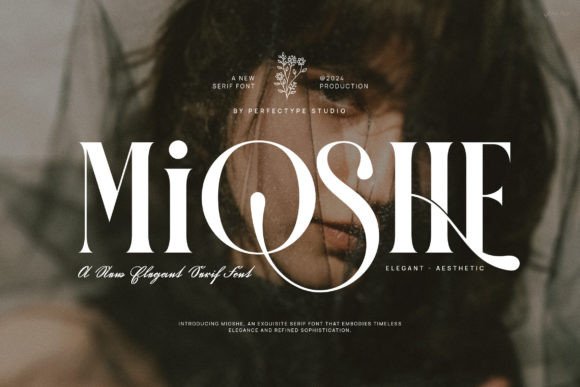
Mioshe is a serif typeface where each letter doesn't just occupy space alongside its neighbor—it connects to it. The strokes flow from one character into the next, creating a visual rhythm that feels intentional and refined. It's not a script font in the traditional sense, and it's not a standard serif you'd find in a newspaper. It occupies a unique middle ground: structured enough to remain legible, fluid enough to feel alive.
What Makes This Typeface Feel Different
Most serif fonts treat individual letters as independent units. You set them side by side, adjust the kerning, and call it a day. Mioshe takes a fundamentally different approach. The terminals and entry strokes of each character are designed to blend seamlessly into the following letter. The result is a continuous visual thread that runs through every word.
This connected quality gives text a sense of movement. Words feel like they're being written in real time, even though they're set in a static typeface. For designers working on projects that need warmth, personality, and a human touch—without sacrificing the clean structure of a serif—this is a genuinely useful tool.
The font also ships with a generous collection of ligatures and alternate glyphs. Because it's PUA encoded, every single one of those characters is accessible through standard design software. You don't need special plugins or workarounds. Open your character panel, browse the available options, and drop them into your layout. It's straightforward, which matters when you're juggling a dozen other design decisions on a deadline.
Where Mioshe Actually Works in Real Projects
Theory is fine, but practical application is what determines whether a font earns its place in your toolkit. Here's where this particular typeface tends to perform well.
Brand identity work is a natural fit. If you're building a visual system for a boutique brand, a lifestyle company, or a creative studio, Mioshe gives you a serif option that doesn't feel corporate or cold. It communicates craft and care—the kind of impression a small business owner wants to make when competing against larger, more established brands. Think about a handmade candle company, an independent bookshop, or a specialty coffee roaster. These brands need typography that feels personal but polished.
Logo design benefits enormously from connected letterforms. When you're working at larger sizes, the flowing connections between letters become a defining visual feature. A wordmark set in Mioshe looks custom-designed, even if you're working within a template-based system. The alternates and ligatures give you room to tweak the personality without starting from scratch.
Packaging design is another strong use case. On a shelf crowded with products, typography that moves and breathes catches the eye differently than rigid, blocky text. Mioshe works beautifully on labels for artisan foods, beauty products, stationery, and gift items. The connected strokes add a tactile quality that photographs well for e-commerce listings too.
For social media graphics, the font solves a common problem: how to make text-heavy posts feel visually engaging without relying on elaborate illustrations or stock photos. A quote card, an announcement, or a product feature set in Mioshe carries enough visual weight to stand alone. The flowing letterforms create natural eye movement, which keeps people reading rather than scrolling past.
Website headers and blog titles are another practical application. Pair Mioshe with a clean sans serif for body text, and you get a typographic hierarchy that feels balanced and professional. The serif adds character to headlines while the sans serif keeps longer passages readable. This kind of font pairing is a staple of modern web design, and Mioshe slots into that equation without requiring you to rethink your entire layout.
Don't overlook print materials either. Wedding invitations, event programs, restaurant menus, editorial layouts, posters, and business cards all benefit from a typeface that carries elegance without pretension. Mioshe reads well at medium to large sizes, which covers most print applications where display fonts are appropriate.
Matching Typography to Your Actual Goals
Choosing a font isn't just about finding something that looks attractive in isolation. It's about matching the typeface to the specific goals of your project. Ask yourself a few questions before committing.
What emotion should this design communicate? If the answer involves warmth, sophistication, or artisanal quality, a connected serif like Mioshe is worth testing. If the project demands stark minimalism or aggressive modernism, you might be better served by a geometric sans serif.
Who is the audience? A typeface that resonates with a 30-year-old shopping for independent skincare brands might not land the same way with a corporate finance audience. Mioshe skews toward creative, lifestyle, and premium markets. That's not a limitation—it's a clarity of purpose that helps you make faster decisions.
How will the text be consumed? If most of your audience reads on mobile devices, test the font at smaller sizes before finalizing. Connected letterforms can lose some definition when rendered small on low-resolution screens. For headlines, hero sections, and pull quotes, this is rarely an issue. For body copy on a blog, you'll want to pair it with something more utilitarian.
Getting the Most Out of the Font's Features
Because Mioshe includes multiple stylistic alternates and ligatures, take the time to explore what's available. Open the glyphs panel in Illustrator, InDesign, Photoshop, or Affinity Designer and scroll through the full character set. You might find alternate uppercase letters that change the entire feel of a headline, or ligatures that smooth out awkward letter combinations in a brand name.
Test your font pairings carefully. A strong sans serif—something like a modern grotesque or a humanist sans—creates a natural contrast that lets Mioshe shine in headlines without competing for attention in body text. Avoid pairing it with other decorative or script fonts, which can create visual noise rather than hierarchy.
Pay attention to spacing. Connected fonts sometimes need manual adjustments to tracking and kerning, especially in logos and lockups. What looks perfect at one size might feel too tight or too loose at another. Set your text, zoom in, and refine. Those small adjustments separate amateur layouts from professional ones.
A Font That Earns Its Place
Every designer accumulates a library of typefaces over time. Most of them sit unused after the initial download. Mioshe has the kind of distinct personality that makes it worth keeping within reach—not for every project, but for the ones where you need typography that feels handcrafted and connected. Whether you're building a brand from scratch, designing packaging for a client, or creating a series of social media assets that need to feel cohesive and elevated, it offers a practical solution that bridges the gap between traditional serif structure and expressive, flowing design.
The real test of any creative font isn't how it looks in a specimen sheet. It's how it performs under real conditions—in your actual projects, for your actual audience, with your actual constraints. Set some headlines, mock up a logo, lay out a social post. See how it feels in context. That's where good typography decisions happen.