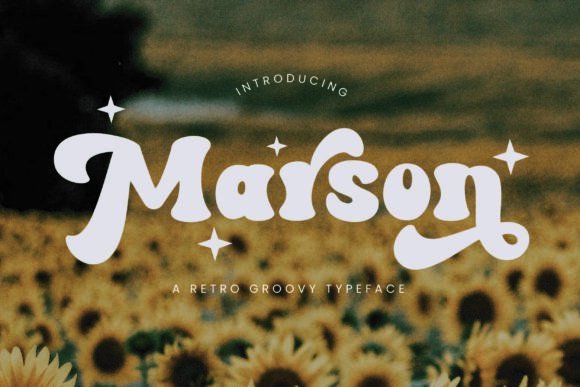
Marson: Where Vintage Soul Meets Modern Polish
There’s a particular kind of visual magic that happens when a design feels both familiar and fresh at the same time. It’s the sweet spot between nostalgia and innovation—a look that draws people in with a sense of history while clearly speaking a contemporary language. If you’ve ever tried to capture that feeling in your own branding or creative projects, you know how tricky it can be. You want character without clutter, personality without sacrificing clarity. That’s the exact space our new typeface, Marson, was designed to occupy.
Marson isn’t just another modern retro font. It’s a thoughtfully crafted tool built for the realities of today’s design landscape. We started with the warmth and distinctive forms of bohemian-inspired typography—that slightly free-spirited, organic quality—but refined every curve and terminal for digital precision. The result is a typeface that carries the soul of handcrafted lettering but performs with the consistency and versatility needed for everything from a startup’s logo to a multinational’s marketing campaign. It’s a premium font that bridges the gap between expressive display type and reliable, readable text.
A Typeface with Depth, Not Just Decorations
What sets Marson apart immediately is its depth. Instead of offering a single static set of letters, it comes loaded with a rich set of alternates and ligatures. This is where the real creative control happens. For a logo, you might swap in a more ornate alternate ‘R’ or a flowing ligature between the ‘t’ and ‘h’ to create a unique wordmark that feels hand-lettered. For a magazine headline, you can use stylistic sets to adjust the overall texture from more traditional to more contemporary. This flexibility means the font adapts to your project’s specific personality, rather than forcing your project to adapt to it.
But character alone isn’t enough. A font needs to work hard. Marson includes comprehensive multilingual support, making it a practical choice for global brands, international blogs, or any project that needs to communicate across languages. It’s designed as a true workhorse creative font, equally at home on a wedding invitation as it is on a product label or a social media ad. The blend of styles—modern, retro, bohemian—gives it a unique versatility that avoids the trap of looking trendy for a season and then feeling dated.
Practical Applications: From Brand Identity to Daily Content
So, how do you actually use a font like this? Let’s move beyond the specimen sheet and talk about real-world application. For branding and logo design, Marson’s alternates are a game-changer. You can craft a truly distinctive wordmark that stands out in a crowded market. The slightly condensed, elegant forms work beautifully for boutique brands, lifestyle companies, craft beverages, or any business wanting to project authenticity with a touch of sophistication. It’s a typeface that suggests a story behind the brand.
When it comes to packaging design, readability is king, but so is shelf appeal. Marson’s clear letterforms ensure product names and key information are legible at a glance, while its stylistic flair helps packaging pop on a shelf or in an online store. Imagine it on a coffee bag, a artisanal soap label, or a gourmet food package—it instantly communicates quality and care. For editorial design in magazines or blogs, it serves as a stunning display font for headlines and pull quotes, drawing readers into the content. Paired with a clean sans serif for body text, it creates a dynamic and engaging visual hierarchy.
The digital space is where Marson’s versatility truly shines. For social media graphics, its distinctive look helps posts stand out in a fast-scrolling feed. Use it for impactful quotes, sale announcements, or brand story highlights. On websites, it’s perfect for hero sections, navigation menus, and call-to-action buttons where you want to inject personality without compromising user experience. For digital products like e-books, worksheets, or online courses, it gives materials a polished, professional presentation that builds trust with your audience.
Building a Cohesive Visual Language
One of the greatest challenges in design is maintaining visual consistency across dozens of touchpoints. Your business card, website, Instagram posts, and packaging should all feel like they belong to the same family. This is where a well-considered typeface like Marson becomes a foundational brand asset. By using its different weights and styles strategically, you can build a flexible yet cohesive typographic system.
For instance, you might use Marson Bold for primary logos and main headlines, Marson Regular for subheadings and important callouts, and a carefully chosen font pairing with a neutral sans serif for long-form body copy. This approach ensures your brand looks professional and intentional at every touchpoint, which directly boosts brand recognition and audience trust. It’s about creating a system, not just picking a pretty font.
Making Smart Typography Choices for Your Project
Choosing the right font is a strategic decision. Before you dive in, consider the core personality of your project. Is it playful or serious? Luxurious or approachable? Marson’s modern retro vibe leans toward warmth and authenticity, making it ideal for projects that want to feel human-centric and creative. It’s less suited for ultra-corporate or highly technical contexts, but perfect for brands in lifestyle, wellness, food, crafts, publishing, and creative services.
Always test font pairings in context. Marson pairs beautifully with a wide range of sans serif fonts—from geometric ones like Montserrat to humanist ones like Open Sans. The key is contrast in structure but harmony in mood. Download the font and set your actual project text. Check the readability at the sizes you’ll use most. Does the body text remain comfortable to read? Do the headlines have the right impact? Play with the alternates and ligatures to see how they can solve specific design challenges, like awkward letter combinations or adding a unique flourish to a key word.
Finally, always review the font’s full character set and licensing. A quality commercial font like Marson will include multiple styles (often from light to bold or black), extensive punctuation, numerals, and symbols. Understanding the licensing is crucial—ensure it covers your intended use, whether for a single client project, unlimited commercial use, or embedding in digital products. This due diligence protects you and your clients down the line.
In the end, typography is one of the most powerful tools in your visual communication kit. It sets the tone before a single word is read. Marson was built to be a reliable, expressive partner in that process—a creative font that offers both the charm of inspired design and the rigor of a professional tool. It’s here to help you build brands, tell stories, and create visuals that resonate, with a style that feels both timeless and right for now.