Monsante: Where 1920s Glamour Meets Modern Design
There’s something magnetic about Art Deco design. The symmetry, the bold lines, the effortless sense of luxury—it’s a style that never really went out of fashion. Whether you’ve seen it in the architecture of the Chrysler Building, the title cards of old Hollywood films, or the branding of high-end hotels, Art Deco communicates prestige without saying a word. Now, imagine capturing that timeless elegance in a typeface you can use for your own projects. That’s exactly what Monsante brings to the table: a modern Art Deco-style font that blends vintage sophistication with contemporary versatility.
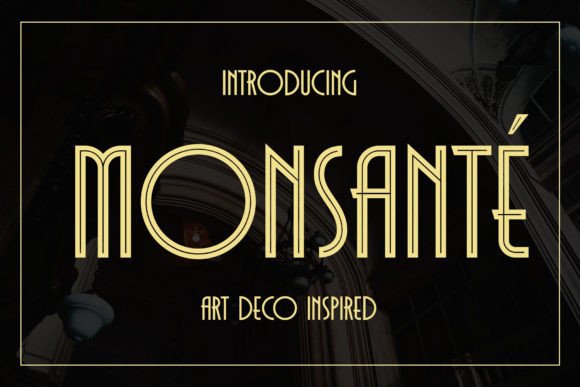
Monsante isn’t just another display font trying to cash in on nostalgia. It’s carefully crafted with distinctive geometric elements and crisp letterforms that feel both familiar and fresh. The font draws direct inspiration from 1920s typography but refines it for today’s designers, creators, and business owners. It’s the kind of typeface that makes you stop scrolling, pause on a page, or linger on a label. And for anyone working on branding, editorial layouts, packaging, or digital content, that pause is everything.
Understanding Monsante’s Two Personalities
What makes Monsante particularly useful is that it comes in two distinct styles: Regular and Inline. These aren’t just minor variations—they’re two different moods that can dramatically shift the tone of your project.
The Regular style is clean, confident, and unapologetically bold. It carries the full weight of Art Deco’s geometric precision, making it ideal for headlines, logos, and anywhere you need to make a strong visual statement. Think movie titles, award certificates, or the masthead of a luxury magazine. It commands attention without feeling overbearing.
The Inline style, on the other hand, introduces a subtle detail—a fine line carved through each letterform that adds dimension and texture. This version feels slightly more decorative, making it perfect for wedding invitations, boutique signage, menu headers, or social media graphics where you want elegance with a bit more personality. It’s the kind of detail that elevates a design from good to memorable.
Having both styles in one font package gives you flexibility. You can use Regular for your primary branding and Inline for secondary applications, or mix them together for a layered, dynamic composition. It’s a practical approach that saves time and ensures visual consistency across different touchpoints.
Where Monsante Truly Shines: Real-World Applications
A font is only as valuable as the problems it helps you solve. So let’s talk about where Monsante actually works in practice—not in theory, but in the kinds of projects real people are creating every day.
Branding and Logo Design: If you’re building a brand identity for a luxury product, a boutique service, or any business that wants to project sophistication, Monsante is a natural fit. Its geometric structure gives logos a polished, intentional look. A skincare brand, a cocktail bar, a high-end photography studio, or a custom jewelry line could all use this font to establish a distinctive visual voice. The key is that Monsante doesn’t just look pretty—it communicates a specific feeling. That feeling is trust, quality, and attention to detail.
Packaging and Label Design: On a shelf or in an online store, packaging has about three seconds to make an impression. Monsante’s bold letterforms and Art Deco flair make those seconds count. It works beautifully on product boxes, bottle labels, candle packaging, or any physical goods where typography needs to do heavy lifting. Pair it with a simple sans serif font for body text, and you’ve got a balanced, professional layout that looks like it was designed by a studio with a much bigger budget.
Social Media Graphics: Instagram, Pinterest, and TikTok are crowded spaces. Standing out requires visuals that feel intentional and cohesive. Monsante works well for quote graphics, promotional posts, story headers, and carousel covers. Its Inline style, in particular, adds a touch of refinement that can make even a simple text-based post feel elevated. If you’re a content creator or small business owner managing your own social presence, having a font like this in your toolkit can make a noticeable difference in how polished your feed looks.
Print Materials and Editorial Layouts: From posters and flyers to magazine covers and book titles, Monsante brings a cinematic quality to print design. It’s the kind of font that makes a poster feel like an event, a book cover feel like a classic, and a certificate feel like an achievement. For editorial designers working on layouts that need strong typographic hierarchy, Monsante pairs well with both serif fonts for a traditional look and sans serif fonts for something more contemporary.
Web Design and Digital Products: While Monsante is primarily a display font, it can serve as a powerful accent on websites—used for hero sections, landing page headers, or call-to-action buttons. For digital product creators designing planners, templates, or downloadable art, this font adds instant value and perceived quality. It tells your audience that you care about design details, which can influence purchasing decisions more than you might expect.
Invitations, Cards, and Event Materials: Wedding invitations, gala programs, milestone birthday cards—these are moments where typography matters deeply. Monsante’s Art Deco roots make it especially fitting for events that call for elegance. The Inline style, with its decorative detail, adds a handcrafted feel that works beautifully on textured paper stocks or foil-stamped designs.
Making the Most of Monsante in Your Projects
Choosing a font is just the first step. Using it effectively is where the real work begins. Here are some practical considerations to keep in mind as you integrate Monsante into your designs.
Match the font to your project’s goal. Not every project needs an Art Deco display font. Monsante excels when the goal is to communicate luxury, sophistication, or vintage charm. If you’re designing for a tech startup or a children’s brand, it probably isn’t the right choice. But for anything in the lifestyle, beauty, hospitality, fashion, or creative space, it can be exactly what’s missing.
Test your font pairings carefully. Monsante is a statement font, which means it needs a quieter partner. A clean sans serif like Montserrat, Lato, or even a simple geometric typeface works well for body copy. Avoid pairing it with other decorative or script fonts, which can create visual noise. The goal is contrast—one font leads, the other supports.
Consider readability at different sizes. Display fonts like Monsante are designed to be seen at larger sizes. At small sizes—especially in body text or fine print—the geometric details and Inline style may lose clarity. Use Monsante for headlines, titles, and large-format applications, and switch to a more legible font for paragraphs, captions, and smaller text elements.
Explore the special characters and ligatures. One of the most valuable features of Monsante is its extended character set. The font includes special characters and ligatures that add unique flourishes to your typography. Because it’s PUA encoded, accessing these glyphs is straightforward—you don’t need advanced design software knowledge to use them. Take the time to explore what’s available. A well-placed ligature or alternate character can turn a standard headline into something that feels custom-designed.
Review licensing for commercial use. If you’re using Monsante for client work, merchandise, or any project that generates revenue, make sure you understand the licensing terms. Most premium fonts come with clear commercial licenses, but it’s always worth double-checking what’s covered—especially if you’re creating products for resale or distributing digital files that include the font.
Why Thoughtful Typography Still Matters
In a world saturated with templates and free fonts, the decision to invest in a thoughtfully designed typeface like Monsante is a strategic one. It’s not about being flashy or trendy. It’s about choosing design assets that align with your vision and communicate your message with clarity and intention.
Good typography builds brand recognition. It creates visual consistency across platforms—from your website to your packaging to your social media. It makes your content more readable and your designs more professional. And perhaps most importantly, it helps your audience feel something before they’ve even read a single word.
Monsante offers that rare combination of historical inspiration and modern usability. It’s a creative font with real commercial value, designed for people who take their visual communication seriously—whether they’re running a business, building a brand, or simply creating something beautiful for the joy of it. If your next project calls for a touch of elegance and a bold typographic statement, this is a font worth exploring.